

This Old School Sugar Tool Dates Back To Medieval Times
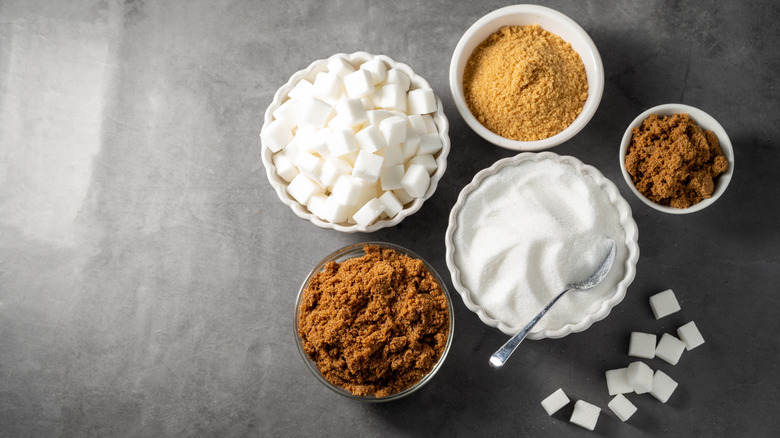
Nowadays, cooks select between many types of processed and natural sugars, with the ingredient either cubed or crystallized into granules. Yet in times past, the sweet stuff took on a completely different form, instead distributed as a paper-wrapped large intact block. Up through the 19th century, cooks would purchase such clunky sugar cones — also called sugar loaves — then store the ingredient in dedicated sugar chests. To wield this now-outdated sugar type, an interesting old-school tool came into play: sugar nippers.
Come across such unusual-looking tongs today, and their sugar functionality would be hard to guess. The device features an all-metal construction, with a curved shape vaguely reminiscent of pliers. Yet at the tool's end come two curved clasps, which could wedge themselves into a sugar block and break off a piece for consumption. Next, this smaller chunk could be hand-grated for cooking applications or plopped into a hot beverage, like tea.
Sugar nippers came in a multitude of designs, some with stately aesthetic flourishes, others as utilitarian as can be. The tool traces back to medieval times, with usage both in Europe and the New World. Now fully irrelevant, sugar nippers offer a curious glimpse into a bygone culinary era.
Sugar nippers date to a prior era of sugar distribution

Sugar nippers date back to a time period when now commonplace sugar was far more expensive. From the sweetener's 11th century introduction to Europe until the rise of industrial processing and beet-derived sugar in the late 19th century, utilizing the foodstuff entailed completely different logistics. For many, that simply meant creative cooking with honey, maple syrup, and other alternative sweeteners. Yet the more well-to-do – say the George Washington estate – kept a processed sugar brick alongside a pair of sugar nippers, dedicated for months-long consumption. Such a context explains the sugar tool's appearance in modern museum collections; artisans produced silver-made sugar nippers, coated in aesthetic designs.
The need for the tool peaked during the 17th-18th centuries, when sugar sourced from the West Indies proliferated in the U.S. and Great Britain. The circulation of sugar loaves continued into the mid-19th century, until the tool's unwieldy functionality inspired the invention of the sugar cube in 1843. Over the next few decades, the sugar cube grew in prominence as the industry's go-to, perfect for dissolving in drinks – leading to applications like use in an old fashioned. Come the 20th century, now standard granulated sugar also appeared on the scene, rendering sugar nippers completely obsolete.