

The Kitchen Tool Andrew Zimmern Swears By But Few People Actually Own

Chefs know how to use all kinds of tools, gadgets, and appliances that most people do not even know exist to create their food. And when innovative new ones are introduced, they are among the first to learn about them. But celebrity chef Andrew Zimmern swears by something so basic it goes back to the Stone Age: a simple mortar and pestle.
The former "Bizarre Foods" TV host keeps several different ones of various sizes and materials on his kitchen counter and told Tasting Table: "I love mine and use it every day for grinding spices, making sauces, mayo, and more." In addition to spices, foods commonly ground with the mortar and pestles include dried and fresh herbs, nuts, garlic, and dried peppers. What's more, the ground items can be blended or emulsified with creamy and/or liquid ingredients right in the bowl-like vessel to make mouthwatering sauces and dips.
Mortar and pestles are used by many cultures around the world, and some iconic foods are traditionally made with them, such as Italy's pesto sauce and Mexico's guacamole (although there is a wrong way to make guac with a mortar and pestle). However, when it comes to the U.S., it generally is not something most Americans have in their kitchen.
How to use and choose a mortar and pestle
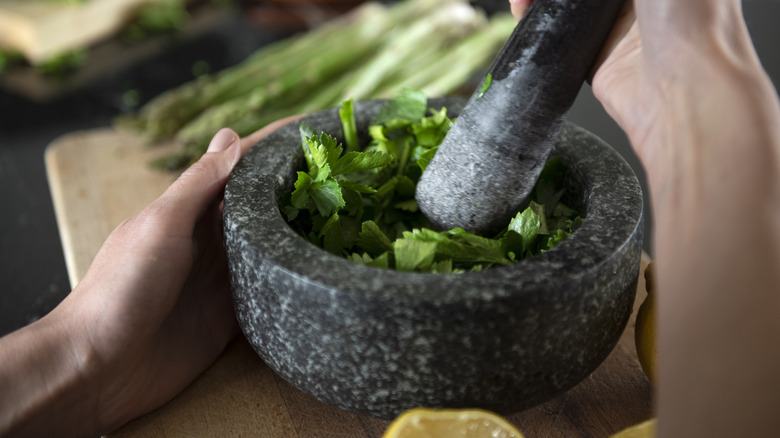
There are benefits to using a mortar and pestle beyond getting a mini-workout for your arm. Pounding and grinding the ingredients produces a deeper flavor, as bruising releases more of it than chopping. It also allows you to better see and control the consistency, so you can grind items to exactly as coarse or fine as you want.
To use one, first pound — don't press — the ingredient inside the mortar with the pestle to crush it, but not too forcefully. Then grind by moving the hand tool around in a circle until it reaches the right texture. For fresh items, like non-dried herbs and spices, chop them into pieces before beginning the process.
Mortar and pestles come in a range of sizes and can be made from materials like granite, marble, and other stones, as well as ceramic, wood, and metal. If you want to try your hand at using one, a versatile size to buy is around six inches across and three inches deep. Stone is a relatively easy material to clean, and granite in particular may be the best choice to start with. The coarse surface provides friction that helps break down the food, and it is non-porous, so it will not retain any flavors.
Static Media owns and operates Tasting Table and Food Republic.