

You Can Grow A Pomegranate Tree Indoors, But There's A Slight Catch
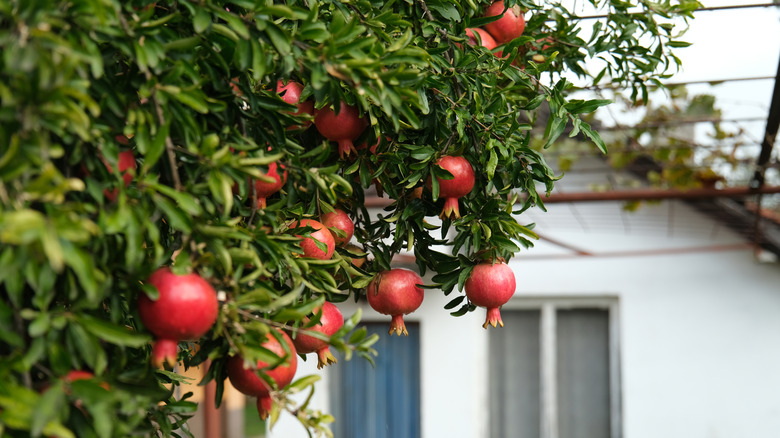
Due to weather or space, gardening indoors is never a bad call. Yet while growing ginger or herbs comes as an obvious choice, planting a domestic pomegranate tree might feel like an outlandish idea. After all, this long-consumed fruit sprouts from a large, shrub-like plant that towers over humans — not an easy fit in most homes.
So for a clever solution, Food Republic's lucky to have the guidance of Steve Corcoran, the CEO of Lawn Love. He recommended procuring a dwarf pomegranate tree, which sprouts into a manageable height and root system better suited for indoors. These miniature versions only reach two to four feet, while "[pomegranate] trees can grow up to 20 feet tall," noted Corcoran.
The dwarf trees still produce fruit, resulting in pomegranates that also shrink in size, coming in closer to two inches in diameter. Despite a smaller yield, the edible seeds still offer pomegranate's distinct sweet-sour flavor, ready for applications like a tart addition to salad. Not to mention the plant delivers eye-catching aesthetic value, adding splashes of rich red color into a space. It's an intriguing gardening choice worth considering for the home.
Create ideal conditions for an indoor dwarf pomegranate tree

To those unfamiliar, classic fruit tree varieties like apples, citrus, or pears can all be dwarfed through a straightforward grafting process. Across the board, such a transformation yields useful advantages (like less pruning) — dwarf pomegranate trees included. In addition to having dimensions that can fit indoors, "dwarf varieties can handle being grown in pots," Steve Corcoran pointed out.
"The bigger the fruit tree, the bigger and more expansive its root system," he said, and pomegranate plants do sprout far and wide. Even with a dwarf variety, he still recommended "looking for a 15-gallon container." You'll want to place the potted plant right by the window or even invest in growing lights, as full-spectrum lighting encourages fruit production.
Investing in such a tree is a patient yet rewarding process. You'll only get pomegranates in two to three yearsand the plant's lifespan can reach three decades. That'll give you plenty of time to learn how to eat a pomegranate without making a mess, letting you enjoy the long-awaited fruits of your labor mess-free.