

What Makes A Bodega Different From A Convenience Store?
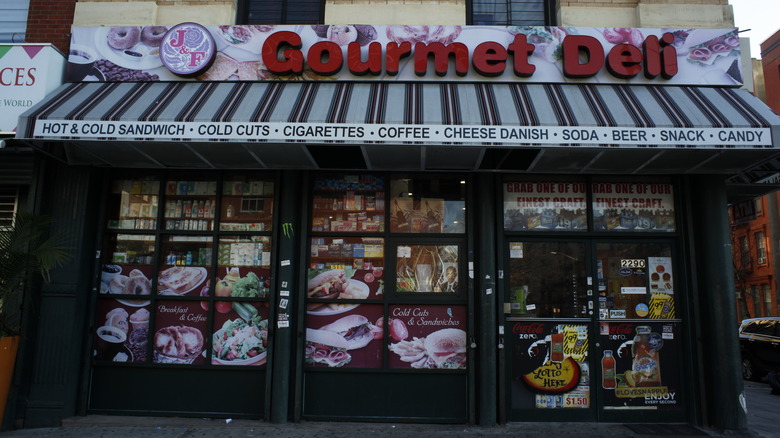
What do you call the shop around the block where you can stop for a snack, a lottery ticket, and a roll of toilet paper? Depending on where you are, you might refer to that place as a convenience store, corner store, bodega, or even deli. In New York City, it would be one of the last three, but the Big Apple has a unique claim to the term 'bodega.' But are these all names for the same thing?
It depends on whom you ask. The term bodega translates to 'warehouse' or 'wine cellar' in Spanish, and though it is still used in that context elsewhere, its definition in New York has expanded over time to refer to small, independent, owner-operated grocery stores with an informal and familiar atmosphere — specifically, ones run by Puerto Ricans, Dominicans, or other Latinx groups.
Some will claim it's not actually a term native New Yorkers use, but rather one that was adopted by non-Hispanic transplants as a way to 'sound more local.' (Many of these bodega truthers instead use the term deli to denote a convenience store that sells food to order, and a corner store to denote one that does not.) But in general, bodegas can be considered a subsection of convenience stores that are distinguished from corporate chain convenience stores like 7-Eleven or Wawa by their cultural heritage and general vibe.
History and heritage of bodegas
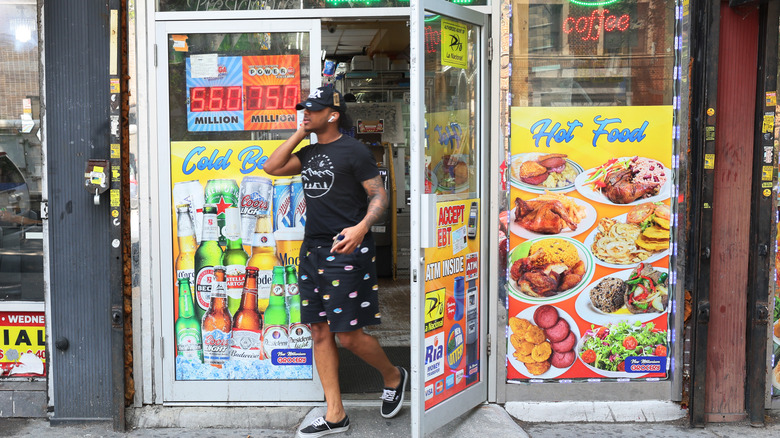
Bodega owners often maintain close relationships with their customers and communities, and their stores can serve as casual hangout spots for people in the neighborhood. These bodegueros (literally winemakers but now also bodega owners) might keep a hardworking pest control specialist on retainer (i.e., a bodega cat), or let locals prop up a card table inside and play dice. But this atmosphere is directly connected to the cultural legacy of the bodega.
New York-style bodegas date back to the early 20th century, when Spanish-speaking immigrants, predominantly Puerto Ricans, needed a place to sell specialty items from back home that weren't available elsewhere in the city. As different waves of Puerto Rican immigrants came to America throughout the 20th century, bodegas became places for these newcomers to make connections within their communities.
Starting in the 1980s, as the next generation of Puerto Ricans lost interest in running New York's bodegas, many were taken over by Dominican immigrants. Today, most Latinx-owned bodegas in New York are run by Dominicans, but they serve a similar communal function. And while there are non-Latinx-owned delis and corner stores throughout New York, many consider the term bodega to be intrinsically linked to Latinx-owned shops. Indeed, the United Bodegas of America (UBA) organization, which serves to support bodega owners, maintains a solely Spanish-language website.
What bodegas do and don't sell
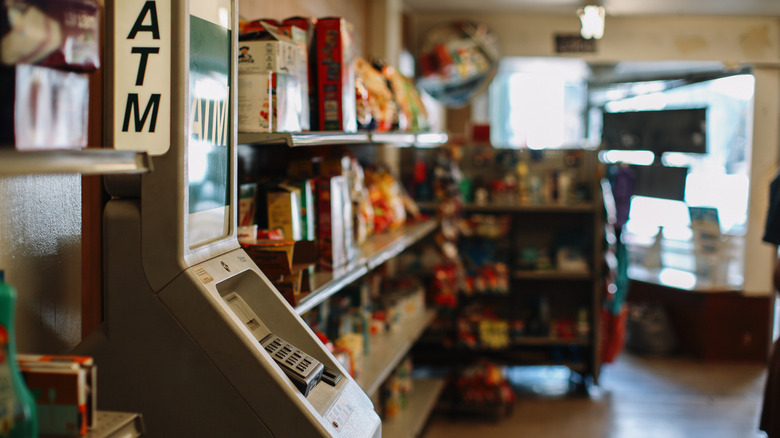
Per the New York State Department of Health, a bodega is a shop that sells milk, focuses on food but is not a specialty store (like a butcher or candy shop), and has no more than two cash registers. A generic convenience store could also meet these criteria; the lines can get blurry, so let's lay out the details.
Both convenience stores and bodegas sell food and household items, are small in size, and are often (though not always) open 24/7. Convenience stores in the U.S. are often attached to gas stations while bodegas are not. Convenience store chains often sell many fast food options made to order while bodegas typically stick to sandwiches (like the ubiquitous NYC baconeggncheese), made behind a small deli counter. Bodegas also generally stock a lot of Latin American snacks and beverages. Both convenience stores and bodegas often, but not always, sell alcoholic beverages like beer and hard seltzers (though never wine or liquor).
There are many similarities between convenience stores and bodegas, leading to tech bro-operated "bodega" copycats and other attempts to erode the distinctions between them. But at the end of the day, the identity of NYC's bodegas rests more on history and heritage than what's on the inventory sheet. A convenience store is a place you go to grab a coffee; a bodega is a place you go to connect with your neighborhood ... and debate who makes the best chopped cheese in town.