
Weird Or Good: Kimchi
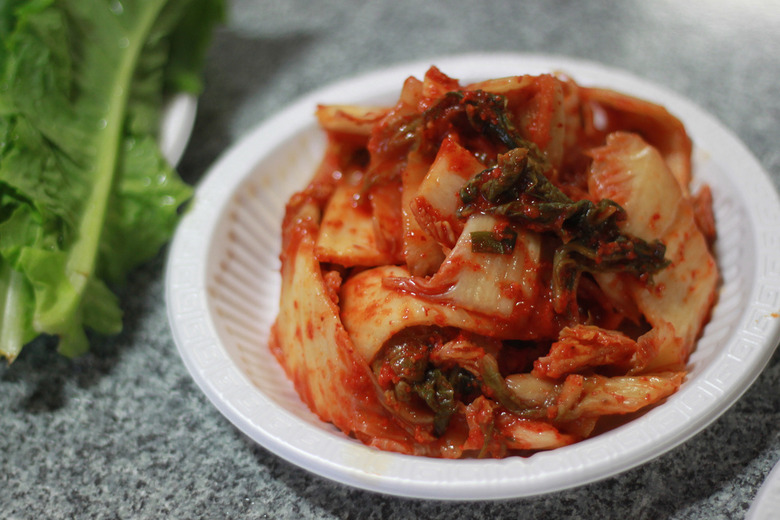
Remember bird flu? Infected chickens who were fed kimchi actually began to recover. There's even a museum in Seoul dedicated to the pungent stuff. The average Korean eats about 40 pounds of kimchi a year and no meal is considered complete without it, so while it may be weird, it's clearly also delicious. Now let's get into how weird.
Considered one of the world's healthiest foods, kimchi, or Korean chili-seasoned fermented cabbage, contains the following: Fiber, probiotic bacteria, and vitamins A, B and C. The kimchi realm boasts over 200 varieties, paired with different dishes much like wine. The one you're most likely to encounter here is tong baechu, made from Napa cabbage.
First, whole heads of cabbage are split lengthwise, cored, and soaked in saltwater brine overnight. Then they're rinsed and thoroughly spread (rubber gloves required) with a mixture of preserved tiny shrimp, garlic, ginger, scallions, onion, fish sauce, powdered red pepper, sugar, and salt. The seasoned cabbage ferments in a sterilized container at room temperature for a couple of days, then is transferred to the fridge, aged a little more, and served.
Kimchi provides the crunch and acid necessary to balance out the richness of sweet, fatty meat like bulgogi and kalbi, and while it may not be love at first sight (or smell) to non-Koreans, we think it's fermentastic.