

How John Wayne Liked His Steak Cooked
We may receive a commission on purchases made from links.
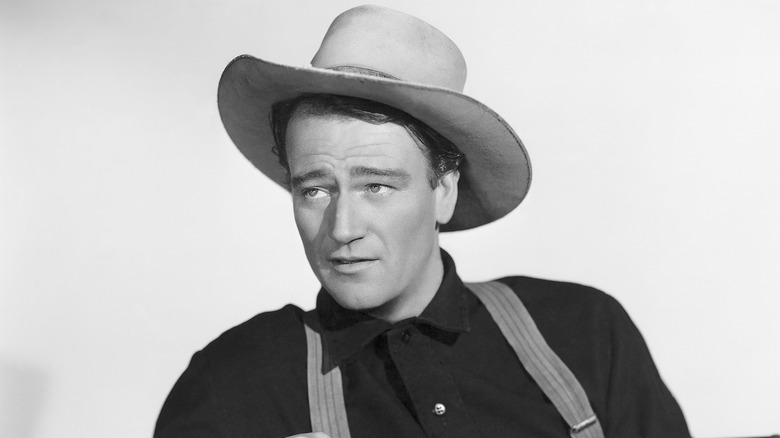
Few actors define the Golden Age of Hollywood as much as John Wayne. With a gilded career spanning more than 175 films, Wayne left a legacy as one of the most recognizable figures of the cowboy genre. Famously, in true cowboy style, he was also an avid at-home griller — one whose favorite steakhouse eveb named a table after him because he dined there so often. But how did he like his cuts prepared? Contained within "The Official John Wayne Way to Grill," which features more than 100 of the late actor's favorite recipes, it is revealed that Wayne preferred his steaks cooked in a distinctly American fashion: charred medium.
To achieve this style, you'll want the inside of the steak to be cooked to medium, which is typically around 140 degrees Fahrenheit. Meanwhile, you want the exterior to develop a beautiful, smoky crust. However, if your timing or temperatures are even a little bit off, the inside of your steak can easily overcook as the crust develops, leaving the interior dry and tough.
Luckily, John Wayne's children have shared the secret to their father's signature method, which centers on a high-heat sear followed by a slow finish (via YouTube). By placing the meat on a blazing-hot grill for two minutes per side, you develop that beautifully charred crust. From there, the process shifts: Reducing the heat and closing the lid transforms the grill into a smoky, oven-like environment that infuses the cut with depth. Just make sure to rest your grilled steak once it's off the heat — this allows the juices to redistribute and the fibers to relax, resulting in a meal worthy of the Duke himself.
Things to consider when cooking a steak to a charred medium
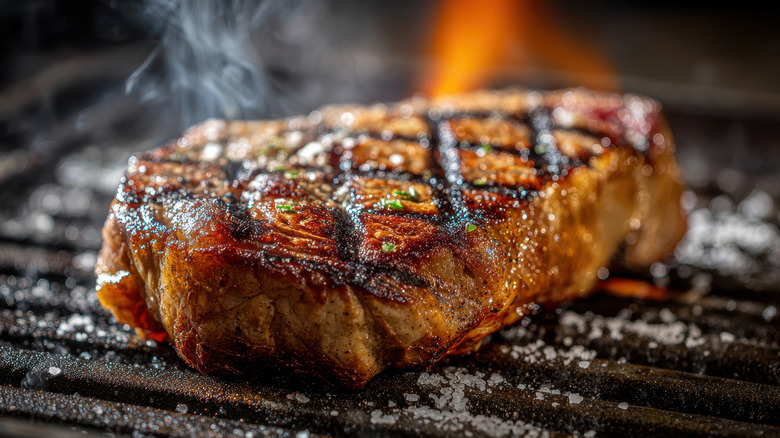
If you're keen on emulating John Wayne's steak-cooking style, there are a few things to clarify beforehand. For starters, not every steak is well suited for grilling. Thin cuts, like flank, are ideal for quick cooking methods such as stir-frying, as they cook evenly in a short amount of time. However, this same characteristic makes it difficult to achieve a deeply charred exterior while keeping the interior at a medium doneness, as the meat can overcook almost instantly when exposed to extremely high temperatures. Similarly, leaner cuts like filet mignon don't have the same amount of intramuscular fat as cuts like ribeye, which means they are more likely to dry out. This makes it challenging to achieve a deeply charred exterior while maintaining a juicy, medium interior.
We recommend sticking to this grill method with steaks that have high marbling and are naturally thick. Ribeye is the obvious choice, but for those on a budget, the Denver steak is also an excellent alternative. Other strong options include bone-in steaks, like porterhouse or T-bone, as the bone acts as an insulator, preventing the meat from overcooking.
For a beautiful crust, there are also a few steps you can take before cooking to guarantee perfect results. You should always dry your steak using a paper towel to remove any surface moisture, which can inhibit browning. Dry-brining your steak with salt is also an excellent technique for penetrating flavor deep into the interior while dehydrating the exterior, further contributing to a perfectly charred crust.